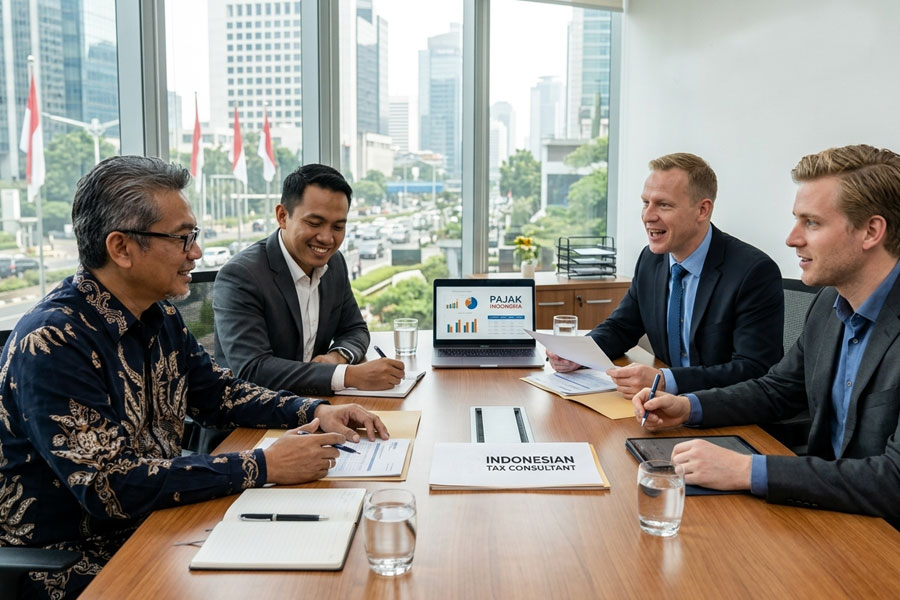
The world of taxation in Indonesia has undergone significant transformation as the government works to increase the tax ratio to fund national development. Constantly changing regulations — from the implementation of the Core Tax Administration System to adjustments in VAT and income tax rates — require taxpayers, both individuals and corporations, to have a deep understanding of their fiscal obligations. In this context, the role of a tax consultant in Indonesia becomes crucial as a bridge between taxpayers and the tax authority, the Directorate General of Taxes (DJP).
A professional tax consultant in Indonesia is not just someone who crunches numbers — they are a strategic partner who ensures both tax compliance and tax efficiency within the boundaries of the law. Indonesia’s tax system operates on a self-assessment basis, where taxpayers are trusted to calculate, pay, and report their own taxes. However, in practice, interpreting tax laws often creates ambiguity. Tax consultants provide legal certainty through accurate interpretation of the General Tax Provisions and Procedures Law (UU KUP).
Table of Contents
ToggleWhy Do Businesses Need a Tax Consultant?
For businesses, taxes are a significant cost that directly affects cash flow and profitability. Tax consultants help companies optimize their taxable income through legal tax planning — such as making use of tax incentives, proper asset depreciation, and managing deductible expenses. Without expert guidance, companies risk making reporting errors that can result in administrative penalties such as fines or interest charges under the UU KUP.
Tax consultants also play a vital role during tax audits. Audits can be a stressful experience for taxpayers. An experienced tax consultant will accompany the taxpayer through the process, prepare the necessary supporting documents, and provide strong legal arguments to defend the taxpayer’s position before the tax auditor.
Qualifications and Ethics of Tax Consultants in Indonesia
In Indonesia, the tax consulting profession is strictly regulated by the Minister of Finance Regulation (PMK). A tax consultant must hold a tax consultant certificate (Brevet A, B, or C) and be officially registered with the DJP. This ensures they have solid technical competence. Beyond competence, professional ethics are the foundation. Tax consultants are required to maintain the confidentiality of taxpayer data and uphold integrity in all professional conduct.
In the digital era, tax consultants must also adapt to electronic reporting systems such as e-Faktur, e-Bupot, and other data integration systems. The ability to combine information technology with tax compliance is now a highly sought-after value-add for businesses today.
Choosing the Right Tax Consultant for Your Business
Choosing a tax consultant is not a decision to be made lightly. There are several criteria to consider:
- Legality and Practice License — Make sure the consultant holds an official license from the DJP and is a member of a professional association such as IKPI (Indonesian Tax Consultants Association).
- Industry Specialization — Each industry has its own unique tax characteristics, such as mining, manufacturing, or e-commerce. Choose a consultant who understands the specifics of your industry.
- Track Record and Reputation — Experience handling tax disputes at the Tax Court is a good indicator of quality.
- Communication and Transparency — A good consultant will always provide clear and transparent explanations of the risks and opportunities involved.
Amid the dynamics of the global and domestic economy, the role of tax consultants in Indonesia has shifted from being a mere administrative helper to becoming a strategic advisor who helps companies navigate regulatory complexity. By working with a competent tax consultant, taxpayers can not only avoid the risk of penalties, but also legally and ethically optimize their financial position. For those who want to ensure their business stays compliant and efficient, partnering with a professional tax consultant is a highly valuable long-term investment.