Indonesia has long been a magnet for global investors looking to tap into a growing market with a population of over 278 million people. For foreign investors, the only legal vehicle to carry out commercial activities, generate revenue, and officially employ foreign staff is through a Foreign-Owned Limited Liability Company, known as a PT PMA (Perseroan Terbatas Penanaman Modal Asing).
Understanding the PT PMA registration process in Indonesia is a crucial step for any entrepreneur who wants to invest sustainably in the country. This article covers the legal aspects, capital requirements, and operational procedures needed to ensure your business runs within the boundaries of the law.
Table of Contents
ToggleWhat Is a PT PMA and Why Does It Matter?
A PT PMA is a business entity established under Indonesian law with partial or full foreign capital participation. Unlike a Representative Office, which can only function as a research or marketing unit and is not allowed to generate revenue, a PT PMA gives investors full freedom to carry out commercial transactions, issue invoices, and sign business contracts.
This structure also provides strong asset protection. By setting up a PT PMA, investors separate their personal assets from company assets, creating a solid legal protection layer. In addition, a PT PMA allows investors to obtain land rights through a Building Use Right (HGB), which is essential for sectors such as manufacturing, hospitality, and property.
Regulatory Framework and Compliance
The Indonesian government has made major reforms to make investment easier through the Omnibus Law (Job Creation Law). The main legal framework governing PT PMA includes:
- Law No. 25 of 2007 on Investment
- Law No. 40 of 2007 on Limited Liability Companies
- Government Regulation No. 5 of 2021 on Risk-Based Business Licensing
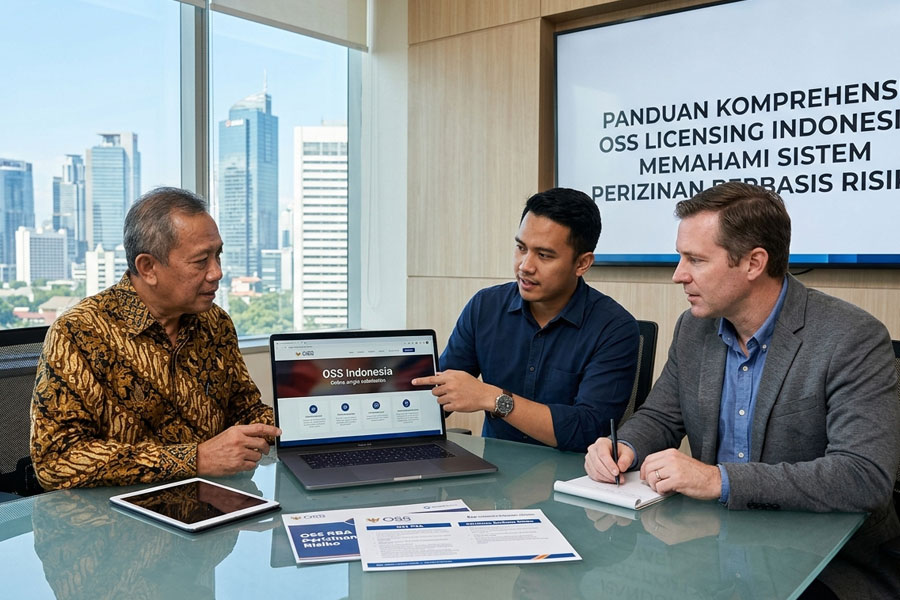
The current licensing system is integrated through the Risk-Based Online Single Submission (OSS). This means the level of licensing required depends on the risk profile of your business. Low-risk businesses only need a Business Identification Number (NIB), while high-risk businesses require additional technical verification.
Capital Requirements and Company Structure
One of the most significant changes in recent regulations is the adjustment to capital requirements. Based on BKPM Regulation No. 5 of 2025, the minimum paid-up capital for a PT PMA has been set at Rp2.5 billion. However, it is important to note that the total investment plan must exceed Rp10 billion per KBLI code and per project location, excluding the value of land and buildings.
The minimum company structure must consist of at least two shareholders (which can be individuals or foreign legal entities), at least one Director, and one Commissioner.
Steps to Register a PT PMA
The registration process can be broken down into several key phases:
- Determine KBLI and Structure — Make sure your business sector is open to foreign investment according to the government’s investment priority list.
- Prepare the Deed of Establishment — Work with a notary to draft the deed, which includes the company’s articles of association.
- Register on OSS — Upload your legal documents to obtain a NIB.
- Fulfill Tax Obligations — Obtain a company tax ID (NPWP), which is mandatory for banking operations.
- Sector-Specific Licenses — Apply for special permits if your business operates in a heavily regulated sector such as healthcare, finance, or construction.
Long-Term Benefits: KITAS and Security
One of the biggest advantages of PT PMA registration in Indonesia is access to a residency permit for investors, known as the Investor KITAS. With a KITAS, investors and their families can legally live in Indonesia for the long term. After five years, KITAS holders may be eligible to apply for a KITAP (Permanent Stay Permit), which offers greater stability for those who want to make Indonesia their second home.
Conclusion
Setting up a PT PMA is not just an administrative requirement — it is a strategic investment to secure your business future in a dynamic market. While the process demands careful attention, complying from day one will protect you from legal risks such as deportation or asset seizure, which are common among those who try to use unofficial arrangements like “nominee arrangements.”
If you need help navigating the complexity of these regulations, it is recommended to work with a legal consultant or business agency experienced in PT PMA registration in Indonesia, to ensure every document and operational step is aligned with the applicable law.