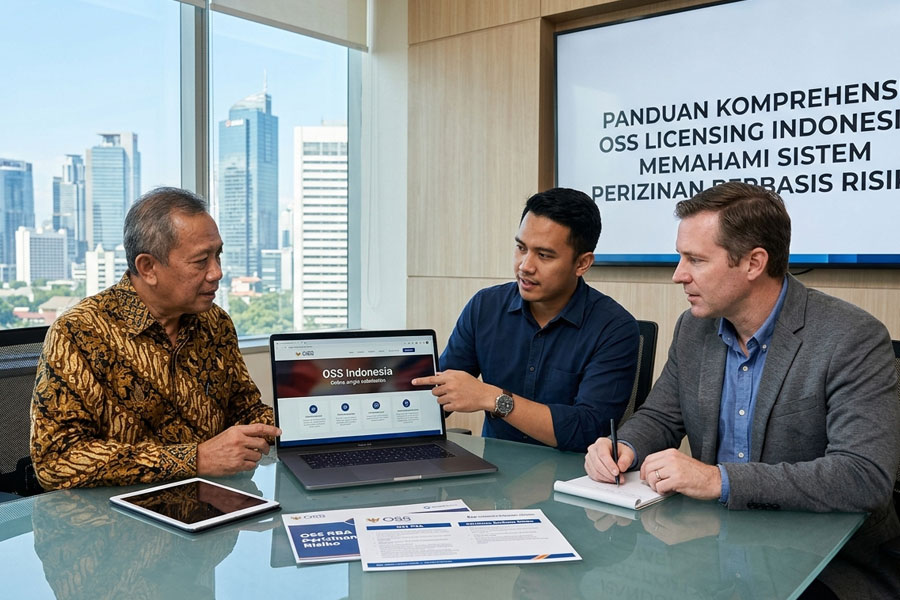
Indonesia has long been an attractive destination for foreign workers looking to contribute across various industries, from manufacturing and energy to information technology. For companies planning to bring in experts from abroad, understanding employment regulations is a crucial step to ensure legal compliance. The term “work permit Indonesia company” refers to a series of bureaucratic processes that a sponsoring company must go through to obtain legal permission for foreign employees to work in the country.
This process is not just a formality — it is a system designed to balance the need for foreign expertise with the protection of the local job market. A key principle followed by many developing countries, including Indonesia, is that foreign workers are only allowed to fill positions that cannot yet be filled by local workers. Because of this, companies must prove that need through structured workforce planning documents.
Table of Contents
ToggleUnderstanding the Legal Framework for Foreign Workers
Legally, a work permit for foreigners in Indonesia does not stand alone. It is part of a licensing ecosystem involving the Ministry of Manpower and the Directorate General of Immigration. The main document every work permit Indonesia company needs to understand is the RPTKA (Foreign Workforce Utilization Plan). The RPTKA is a planning document that explains why the company needs to hire a foreign worker, what position they will fill, and how long the work contract will last.
Once the RPTKA is approved, the company must submit a Notification through an online system managed by the Ministry of Manpower. This Notification replaces the old IMTA (Foreign Worker Employment Permit). It serves as official proof that the company has paid the Foreign Worker Compensation Fund (DKP-TKA) of $100 per month.
Step-by-Step Guide to Applying for a Work Permit
The work permit application process for companies in Indonesia can be broken down into these steps:
- Preparing the RPTKA — The company must clearly define the position needed and explain why it requires special skills not available in the local market.
- Paying the DPKK/DKP-TKA — The company must deposit the compensation fund to the state as a contribution toward developing the local workforce.
- Issuing the Notification — Once the RPTKA is approved and payment is made, the system will issue a Notification, which serves as the legal basis for the foreign employee to apply for a visa.
- Applying for a VITAS (Limited Stay Visa) — The foreign employee applies for a visa at the Indonesian embassy or consulate in their home country, along with supporting documents such as a diploma, skills certificate, and work experience letter.
- Converting to KITAS — After arriving in Indonesia, the VITAS must be converted into an ITAS (Limited Stay Permit), which takes the form of a card or e-KITAS.
Why Compliance Matters
Many companies mistakenly assume that a Business Visa is enough to carry out technical work. However, under immigration regulations, a business visa is only meant for non-productive activities such as meetings, negotiations, or attending conferences. Performing technical work — such as installing machinery, fixing systems, or supervising projects — on a business visa is a serious violation that can result in deportation, fines, and a travel ban for the foreign worker, as well as penalties for the sponsoring company.
From a risk management perspective, complying with work permit rules is not just about avoiding fines — it is also about maintaining the company’s reputation with government authorities. Companies with a strong track record of compliance will find it much easier to renew work permits in the future.
Challenges in the Process
One of the biggest challenges companies face is keeping up with constantly changing regulations. The TKA-Online system, now integrated with the immigration system, requires a high level of accuracy when entering data. Small mistakes — such as a wrong job title or a mismatch between educational qualifications and the job description — can result in a rejected application.
To reduce this risk, many companies choose to work with legal consultants or professional visa agents. These experts help ensure that all documents — from the company deed and tax ID (NPWP) to mandatory workforce reports — meet the standards required by the relevant ministries.
Conclusion
Handling a work permit in Indonesia is a worthwhile investment of time and resources for any company looking to grow with international talent. By understanding the process from RPTKA to KITAS, companies can ensure smooth business operations without any legal obstacles. The key to success lies in preparing accurate documents, choosing the right visa category, and fully complying with Indonesia’s employment regulations.