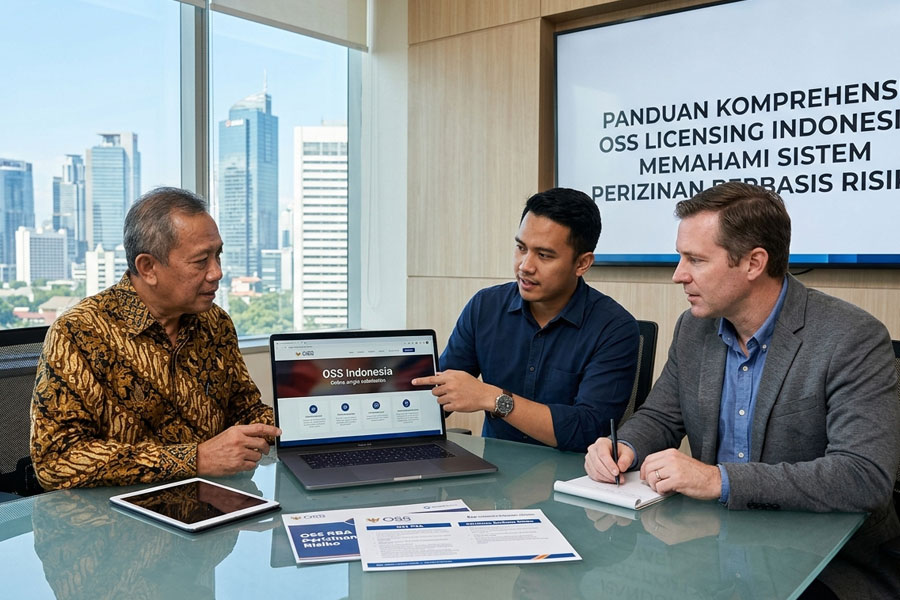
The implementation of the Online Single Submission (OSS) system marks a major milestone in the digital transformation of business licensing governance in Indonesia. The system is designed to integrate various types of permits — from the central to the regional level — into a single unified electronic portal. In public administration and business law literature, the digitalization of bureaucracy is seen as a crucial instrument for cutting administrative barriers that have long been considered a burden on businesses. By shifting from a fragmented manual system to an electronic one, the government aims to create legal certainty, transparency, and time efficiency in the licensing process.
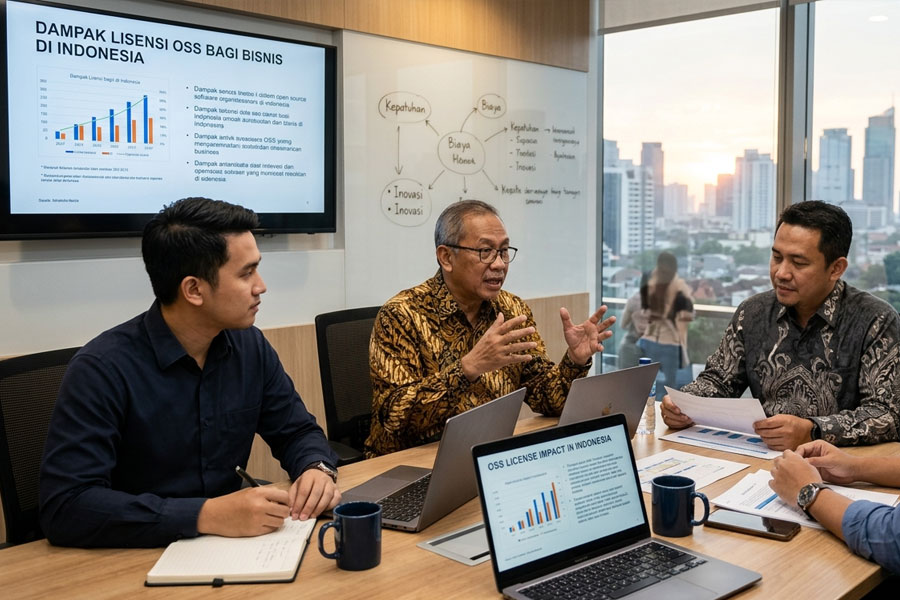
The impact of OSS licensing on Indonesia’s business ecosystem is far-reaching, covering everything from changes in bureaucratic behavior to the acceleration of investment flows. Theoretically, the effectiveness of this system can be measured through quantitative analysis examining how bureaucratic and business variables interact within an integrated system. Research shows that when bureaucratic behavior, business operators, and investment acceleration are combined simultaneously, they have a significant influence on the success of OSS implementation — contributing up to 26.2% in the context of licensing system effectiveness at the regional level.
Table of Contents
ToggleTransformation of Bureaucratic and Business Behavior
One of the most visible impacts of OSS is a paradigm shift in the interaction between government and the private sector. Before OSS, business operators often had to deal with cumbersome bureaucracy — frequently referred to in public management literature as “red tape.” The use of an electronic system forces bureaucracy to become more standardized. In this context, bureaucratic behavior is no longer excessively discretionary but is instead bound by digitally predetermined system workflows.
For business operators, OSS provides significantly easier access. Businesses no longer need to physically visit various government offices for each licensing stage. This directly reduces the transaction costs that companies must bear. This efficiency is especially important for micro, small, and medium enterprises (MSMEs), which often have limited resources to handle complex licensing procedures. With an integrated system, a licensing process that previously took months can now be completed in days or even hours, depending on the business risk level.
Impact on Investment Acceleration
Investment is the engine of national economic growth. In economic models, investment acceleration is often influenced by ease of doing business and regulatory stability. Data shows that investment acceleration at the regional level is strongly influenced by the effectiveness of this system’s implementation. Statistically, the implementation of OSS has a direct impact on investment acceleration of 17.64%. This figure demonstrates that licensing digitalization is not merely a technical change — it is a real catalyst for economic growth.
Challenges and Sustainability
Despite its positive impact, OSS implementation in Indonesia is not without challenges. Digital literacy gaps across various regions, internet infrastructure stability, and data synchronization between ministries, agencies, and regional governments remain important concerns. The success of OSS depends heavily on the bureaucracy’s commitment to continuously updating the system and providing guidance to business operators. Without strong synchronization, even the most sophisticated system will face operational obstacles.
It is also important to note that OSS is just one part of the investment ecosystem. Business success in Indonesia is also strongly determined by other factors such as legal certainty, availability of physical infrastructure, and macroeconomic stability. However, as a policy instrument, OSS has successfully laid the foundation for a more modern and transparent investment climate. By continuously improving this system, the Indonesian government is expected to enhance national competitiveness on the global stage, attract more foreign investment, and empower local businesses to grow faster.