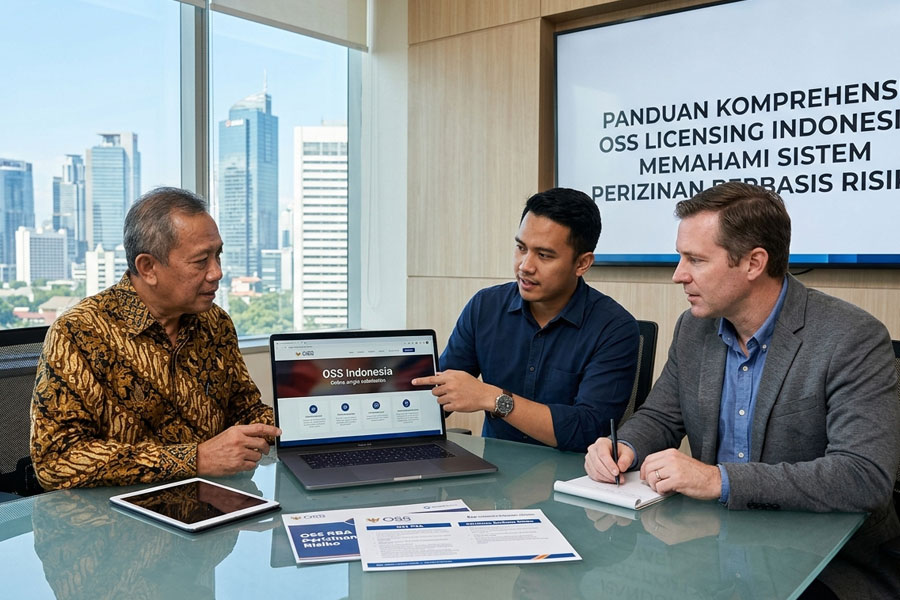
Indonesia, as the largest economy in Southeast Asia, offers a complex yet promising landscape for foreign investors. With a population exceeding 270 million and a continuously growing middle class, the country is a magnet for Foreign Direct Investment (FDI). However, the decision to expand a business into Indonesia requires a deep understanding of market dynamics, the legal framework, and the operational realities on the ground.
Table of Contents
ToggleStrategic Advantages of Investing in Indonesia
The primary advantage of investing in Indonesia lies in the massive scale of its domestic market. Household consumption growth is a key driver of national economic stability. Foreign investors are often attracted to the manufacturing, infrastructure, and digital economy sectors, all of which are undergoing rapid transformation. In addition, Indonesia is rich in natural resources — from nickel to agricultural commodities — providing a comparative advantage in global supply chains.
On the economic front, the Indonesian government has carried out various regulatory reforms, including through the Omnibus Law (Job Creation Law), aimed at simplifying the business licensing process. Foreign investors can also take advantage of tax incentives — such as tax holidays or tax allowances — for certain priority sectors.
The presence of major cities outside Jakarta, such as Surabaya, Medan, and Makassar, also opens up investment diversification opportunities that have not yet been fully tapped by global competition.
Challenges Faced by Foreign Investors
Despite the enormous potential, foreign investors frequently encounter significant bureaucratic hurdles. Although a risk-based licensing approach has been implemented, administrative complexity at the regional level can still pose challenges for foreign companies. Legal certainty and contract enforcement also remain primary concerns for long-term investors.
Another challenge is the difference in business culture and labor regulations. Indonesia’s labor laws strongly protect workers’ rights, which for some foreign investors requires a more intensive adjustment of human resource management strategies. Additionally, uneven logistics infrastructure across the archipelago makes distribution costs a significant variable in a company’s operational cost structure.
Mitigation Strategies for Investors
To mitigate risks, foreign investors are advised to conduct comprehensive due diligence before entering the market. Understanding sector-specific regulations through BKPM (Investment Coordinating Board) is a crucial step. Building strategic local partnerships can also help investors navigate the complexity of local culture and bureaucracy more effectively. Long-term foreign direct investment requires a commitment to sustainability and compliance with Indonesia’s dynamic local regulations.
In conclusion, Indonesia remains a highly promising investment destination with unique demographic advantages and abundant resources. The existing challenges, while real, can be managed with careful planning, a deep understanding of regulations, and a business approach that is adaptive to the characteristics of the Indonesian market.