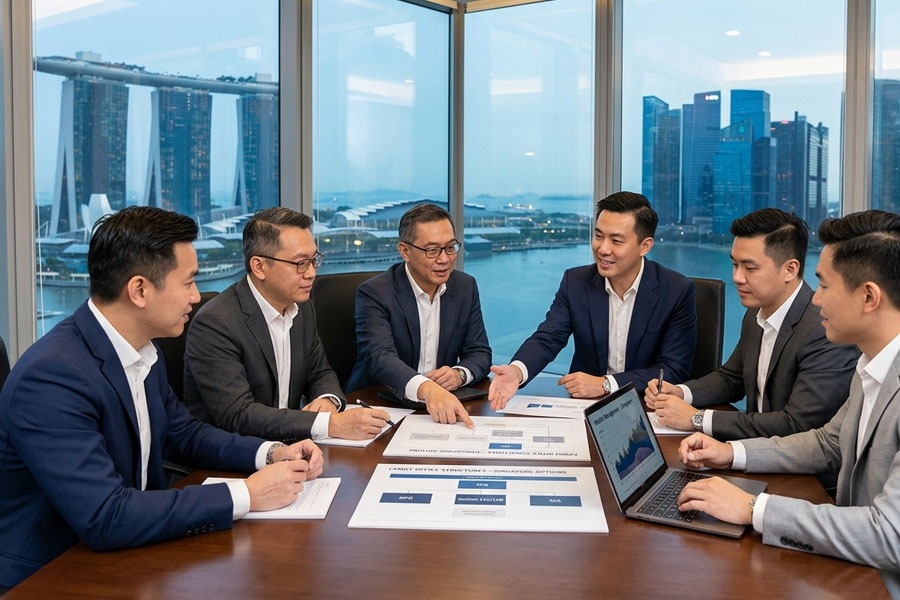
The global landscape of private wealth management has undergone a profound transformation over the last decade, with Singapore emerging as the preeminent hub for ultra-high-net-worth (UHNW) families. As families accumulate significant capital across generations, the complexity of managing these assets—ranging from traditional equities to private equity, luxury assets, and philanthropic endeavors—requires a sophisticated, bespoke structure. This is where the family office becomes an essential instrument for wealth preservation, intergenerational transfer, and strategic growth.
The concept of a family office is inherently adaptable, designed to cater to the specific needs of a family rather than the standardized offerings of traditional retail banking. In the context of Singapore, these entities are broadly categorized into two primary structures: the Single-Family Office (SFO) and the Multi-Family Office (MFO). Understanding the nuances between these types is critical for families considering the city-state as their base of operations.
The Single-Family Office (SFO)
A Single-Family Office is an entity established to manage the financial and personal affairs of a single UHNW family. It is owned and controlled by the family members themselves, ensuring that the investment strategy and governance remain strictly aligned with the family’s unique values and long-term objectives. SFOs typically manage assets exceeding US$200 million, providing a highly personalized suite of services that goes beyond mere investment management.
The primary advantage of an SFO is the total control and privacy it affords. Because the office serves only one client—the family—the decision-making process is streamlined, and the investment philosophy can be tailored to specific risk tolerances and legacy goals. In Singapore, SFOs are often structured to benefit from specific tax incentives, such as the Section 13O and 13U schemes, which provide tax exemptions on specified income derived from designated investments.
The Multi-Family Office (MFO)
In contrast, a Multi-Family Office serves multiple UHNW families under one roof. This structure is often preferred by families who wish to benefit from the professional expertise and infrastructure of a dedicated office without the significant overhead costs associated with running a private, standalone SFO. MFOs provide a broader range of services and often leverage economies of scale to provide access to institutional-grade investment opportunities that might otherwise be out of reach for smaller portfolios.
MFOs are particularly attractive for families who value the collaborative environment and the ability to share the costs of high-level talent, such as tax planners, legal experts, and investment analysts. While they offer less exclusivity than an SFO, they provide a robust framework for families to manage their wealth with professional oversight.
Why Singapore is the Preferred Jurisdiction
Singapore’s rise as a global family office hub is no accident. It is the result of a deliberate, long-term strategy by the government to create a stable, transparent, and business-friendly environment. For families, the “Singapore advantage” is built on several pillars:
- Regulatory Environment: Singapore offers a robust regulatory framework that provides security for assets while maintaining the flexibility required for private wealth management. Most family offices in Singapore are designed to be exempt from licensing under securities law, provided they manage the family’s own assets.
- Tax Efficiency: The city-state boasts a competitive tax regime with no capital gains or estate taxes. Furthermore, the Monetary Authority of Singapore (MAS) provides clear pathways for tax exemptions, making it highly efficient to hold and grow wealth within the jurisdiction.
- Strategic Location and Talent: As a gateway to the ASEAN region and a bridge to global markets, Singapore offers unparalleled connectivity. While there is a noted talent shortage in the sector, the influx of international professionals and the development of local expertise continue to strengthen the ecosystem.
- Governance and Succession: Beyond investments, Singapore is increasingly recognized as a center for estate and trust planning. The ability to formalize family constitutions and governance structures ensures that wealth is successfully transferred across generations, mitigating the risks of family disputes.
Strategic Investment Trends
Family offices in Singapore are not passive holders of wealth; they are active, sophisticated investors. Their portfolios typically mirror global trends, with a heavy emphasis on diversification.
Furthermore, there is a growing trend toward “impact investing” and ESG (Environmental, Social, and Governance) criteria. Younger generations of UHNW families are increasingly pushing for their family offices to align their capital with sustainable development goals, often working in tandem with the government’s net-zero initiatives.
The Role of Outsourcing
Given the complexity of modern wealth management, even the most well-resourced SFOs often choose to outsource non-core functions. Administrative tasks, such as bookkeeping, bill payments, and IT systems integration, are frequently delegated to third-party service providers. This allows the family office staff to focus on their core competencies: strategic asset allocation and family governance. Outsourcing also provides access to cutting-edge AI and automation tools, which are becoming essential for managing the data-heavy requirements of modern investment portfolios.
Conclusion
Choosing the right structure for a family office in Singapore requires a deep understanding of the family’s specific needs, risk appetite, and long-term vision. Whether opting for the total control of a Single-Family Office or the professional efficiency of a Multi-Family Office, families will find that Singapore provides the stability, legal protection, and economic opportunity necessary to thrive. As the city-state continues to evolve as a global wealth hub, the integration of professional management, technological adoption, and a commitment to legacy will remain the hallmarks of successful family offices in the region.