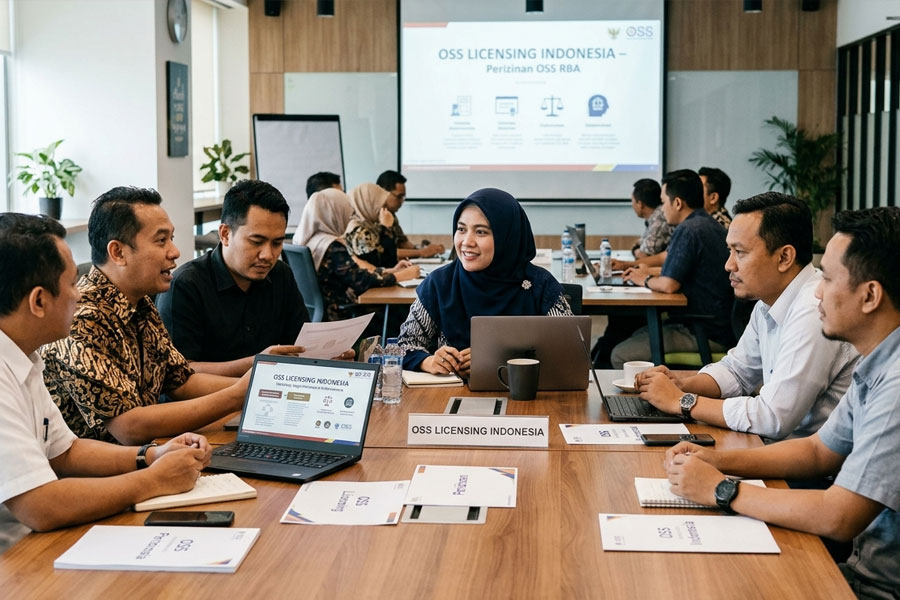
The implementation of Open Source Software (OSS) has become the backbone of digital transformation in Indonesia, spanning from the government sector to startups. However, understanding the legal aspects of OSS licensing in Indonesia is often a grey area that requires careful attention. In Indonesia, the legal framework governing software generally refers to the Copyright Law, but applying globally-oriented OSS licenses requires adapting that understanding to the principles of national civil law and intellectual property.
OSS licenses — such as the GNU General Public License (GPL), MIT, or Apache — are essentially legal contracts that grant users permission to use, modify, and distribute source code under certain conditions. In the Indonesian context, these licenses are recognized as a form of licensing agreement under copyright law. It is important for businesses in Indonesia to understand that “open” does not mean “without copyright.” On the contrary, OSS licenses use copyright mechanisms to ensure that software remains free and open to everyone — through either copyleft or permissive principles.
Table of Contents
ToggleIndonesia’s Copyright and OSS Legal Framework
In Indonesia, software protection is specifically regulated under Law Number 28 of 2014 on Copyright. Article 40 paragraph (1) point s explicitly states that computer programs are protected works. Although this law grants exclusive protection to creators, it does not prevent them from granting usage rights through open licenses. In Indonesian legal practice, OSS licenses are considered valid standard agreements under Article 1320 of the Civil Code (KUHPerdata) regarding the conditions for a valid agreement.
For companies in Indonesia, challenges arise when OSS code is integrated into commercial products. Licenses such as GPLv3 contain a “viral” clause that requires derivative works to also be released under the same license. If a company in Indonesia uses GPL-licensed code in a closed product without complying with the license obligations, they risk facing copyright infringement claims. License compliance audits are therefore crucial for local technology companies.
Implementation Challenges and License Compliance
One of the main challenges in OSS adoption in Indonesia is the lack of legal literacy around the difference between permissive licenses (such as MIT or BSD) and copyleft licenses (such as GPL). Permissive licenses give developers almost complete freedom to use the code in proprietary software, while copyleft licenses require the source code to remain open.
In Indonesia’s startup ecosystem, OSS components are often used without adequate documentation. This creates the risk of “legal debt” that can hinder due diligence processes when a company seeks funding or undergoes an acquisition. Investors will typically review whether the company has violated any OSS licenses that could threaten the company’s core intellectual property rights.
OSS Management Strategies for Businesses in Indonesia
To mitigate legal risks, companies in Indonesia are advised to implement an OSS Governance Policy. Steps that can be taken include:
- Code Inventory — Using automated scanning tools to identify all OSS components used in the company’s codebase.
- License Classification — Categorizing components by license type (GPL, LGPL, MIT, Apache, etc.).
- Developer Education — Ensuring the development team understands the obligations attached to each license being used.
- Documentation Compliance — Providing LICENSE and NOTICE files that meet the requirements of the OSS licenses used in the final product.
The Indonesian government has shown support for OSS through various initiatives, such as using Linux-based operating systems in government agencies for cost efficiency and data sovereignty. However, this support must be accompanied by the understanding that OSS use in the public sector must still comply with applicable license terms to avoid legal disputes in the future.
The Future of OSS in Indonesia
As the digital economy continues to grow, the role of OSS will become increasingly prominent. Indonesia has great potential to contribute back to the global community through the development of local open source projects. By understanding licensing mechanisms, developers and companies in Indonesia can not only protect themselves from legal risks but also collaborate more effectively within the global technology ecosystem.
It is important to remember that OSS licensing in Indonesia is not merely a technical document — it is a legal instrument with real consequences. In Indonesia, where the legal system is based on civil law, the interpretation of these licenses will largely depend on how the contract is structured and understood by the parties involved. Consulting with a legal expert who understands intellectual property and information technology is therefore strongly recommended for companies that rely on OSS as a core component of their business.