Singapore has long been known as a beacon of economic stability and an unrivaled global financial center in Southeast Asia. Since its independence in 1965, this city-state has successfully transformed itself from a colonial trading port into a highly sophisticated wealth and investment hub. This success was no accident — it is the result of disciplined fiscal policy, a business-friendly regulatory environment, and a strategic vision that positions Singapore as the primary gateway for global capital seeking to enter Asia’s growing markets.
Table of Contents
ToggleThe Foundation of Singapore’s Wealth: Stability and Trust
Singapore’s wealth is rooted in a strong legal system and internationally recognized transparency. In classical economic literature on national development, Singapore is frequently cited as a leading example of a “Developmental State” that has successfully integrated free markets with measured government intervention. Global investors choose Singapore not only because of its competitive tax rates, but because of the legal certainty that protects property rights and investment contracts.
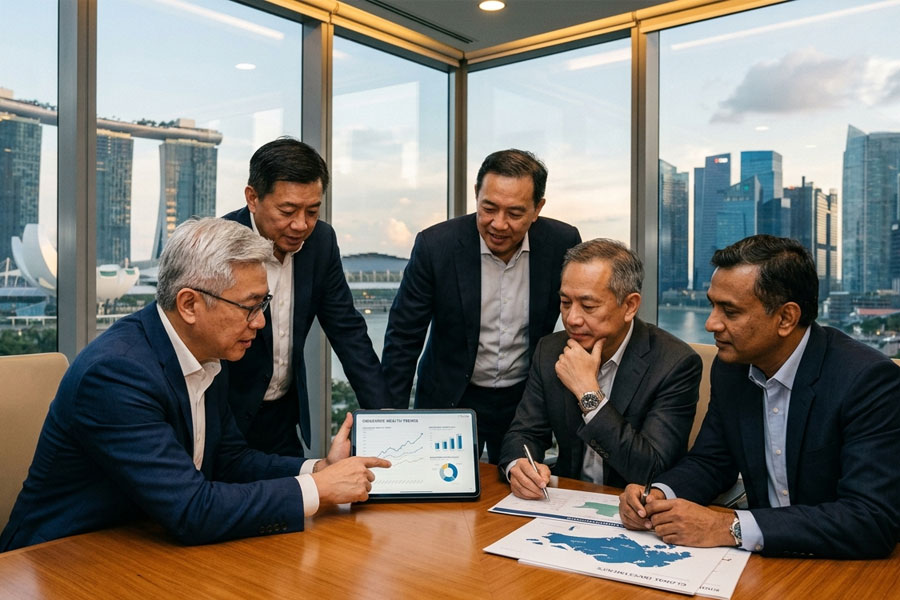
In the context of wealth management, Singapore has grown into Asia’s largest hub for family offices and private banking. Assets managed in Singapore include wealth from ultra-high-net-worth individuals from around the world. Decades of political stability have created an environment where capital can grow with minimal systemic risk.
The Investment Ecosystem: From Equities to Alternative Assets
Singapore’s capital market, led by the Singapore Exchange (SGX), offers a wide range of investment instruments — from equities and bonds to Real Estate Investment Trusts (REITs). Singapore is one of Asia’s most mature REIT markets, allowing investors to gain exposure to commercial and industrial property with high liquidity.
Beyond traditional instruments, Singapore is now positioning itself as a hub for sustainable finance and financial technology (FinTech). Through the Monetary Authority of Singapore (MAS), the government is actively encouraging the adoption of blockchain technology and digital assets within a secure regulatory framework. This attracts institutional investors seeking portfolio diversification beyond traditional assets.
Asset Allocation Strategy and Economic Growth
When managing wealth, investors in Singapore typically apply strict diversification principles. Singapore provides access to a wide range of global asset classes, allowing investors to optimize returns with low transaction costs. Furthermore, Singapore’s tax policy — which does not impose capital gains tax — makes it a highly attractive destination for long-term investors.
The Role of Government and Fiscal Policy
Singapore’s success in attracting foreign direct investment (FDI) is supported by targeted tax incentives for strategic sectors such as biotechnology, advanced manufacturing, and financial services. The Singapore government acts not only as a regulator, but also as an active investor through state-owned holding companies such as Temasek Holdings and GIC (Government of Singapore Investment Corporation). The presence of these entities signals confidence to global markets that Singapore has a long-term commitment to economic growth.
The Future of Investment in Singapore
Looking ahead, Singapore faces challenges from demographic shifts and increasingly intense regional competition. However, with a strong focus on the green economy and digitalization, Singapore continues to adapt. Investment in green bonds and energy transition projects has become a new pillar in the national wealth strategy. For investors, Singapore remains a safe place to preserve and grow capital amid global economic uncertainty.
In conclusion, Singapore’s wealth and investment landscape is not just about numbers on a balance sheet — it is about an ecosystem built on a foundation of trust, innovation, and highly disciplined risk management. For anyone seeking to understand the dynamics of investment in Asia, Singapore remains the most relevant and strategic starting point.