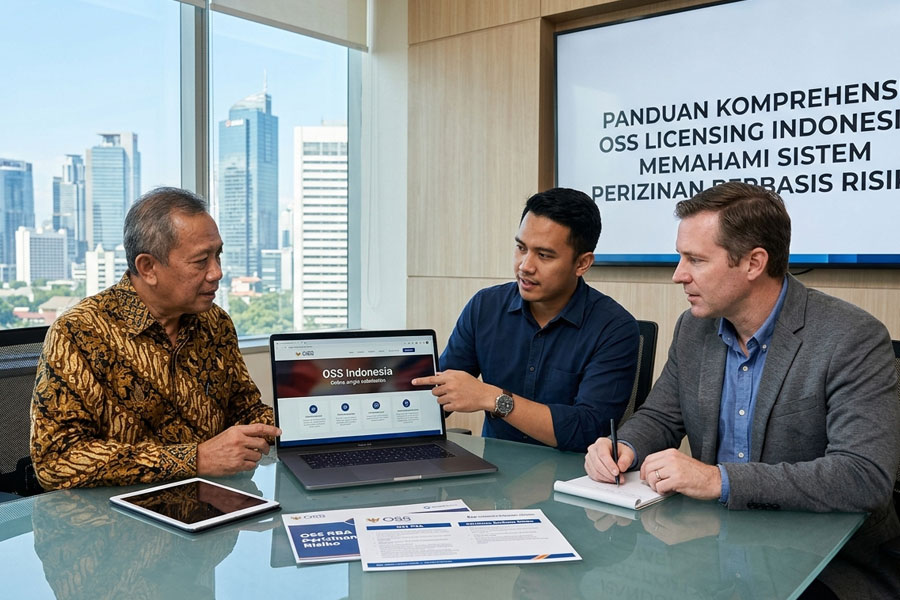
For international professionals seeking to lead business operations in Southeast Asia’s largest economy, understanding the regulatory framework for residency is paramount. Securing a KITAS for foreign director Indonesia is not merely a bureaucratic hurdle; it is the foundational legal requirement that permits a foreign national to reside and work as a member of the Board of Directors (Direksi) within a Limited Liability Company, known locally as a Perseroan Terbatas (PT).
The Indonesian legal system, particularly regarding foreign investment and labor, is governed by strict statutes that mandate specific work permits for expatriates. As noted in authoritative legal texts on Indonesian corporate law, a foreign director must hold a valid Kartu Izin Tinggal Terbatas (KITAS)—a limited stay permit—to legally fulfill their fiduciary duties. This permit is intrinsically linked to the company’s sponsorship and the director’s specific role within the organizational structure. Unlike general work visas, the director-specific KITAS requires the company to be a Penanaman Modal Asing (PMA), or a foreign-owned company, which must meet minimum capital requirements to sponsor expatriate staff.
The Legal Framework for Foreign Directors
In Indonesia, the employment of foreign nationals is strictly regulated by the Ministry of Manpower. A foreign director is classified as a “Foreign Worker” (Tenaga Kerja Asing or TKA). Before a KITAS can be issued, the company must obtain a Rencana Penggunaan Tenaga Kerja Asing (RPTKA), which is a formal plan detailing the necessity of the foreign director’s presence. This document serves as the primary justification for the government to grant work authorization.
The process is a multi-stage endeavor. Once the RPTKA is approved, the company proceeds to apply for a Notifikasi (notification) and the Visa Tinggal Terbatas (VITAS). Upon arrival in Indonesia, the VITAS is converted into the physical KITAS card at the local immigration office (Kantor Imigrasi). This process ensures that the director is fully compliant with the Indonesian Immigration Law, which emphasizes the protection of the domestic labor market while facilitating essential foreign investment.
Essential Documentation and Compliance
Maintaining a KITAS is an ongoing responsibility. A foreign director must ensure that their company remains in good standing with the Badan Koordinasi Penanaman Modal (BKPM). This includes submitting regular investment activity reports (Laporan Kegiatan Penanaman Modal or LKPM). Failure to maintain these reports can lead to the revocation of the company’s sponsorship status, which directly impacts the validity of the director’s KITAS.
Additionally, the director must be aware of the tax implications. In Indonesia, a foreign director is considered a tax resident if they reside in the country for more than 183 days in a 12-month period. The tax liability is calculated based on global income, and the company is responsible for withholding the appropriate income tax (PPh 21) from the director’s salary. The relationship between the KITAS, the work permit, and the tax identification number (NPWP) forms a triad of compliance that every foreign director must master.
Conclusion
Securing a KITAS for a foreign director in Indonesia is a complex process that requires meticulous attention to detail and adherence to both immigration and corporate law.