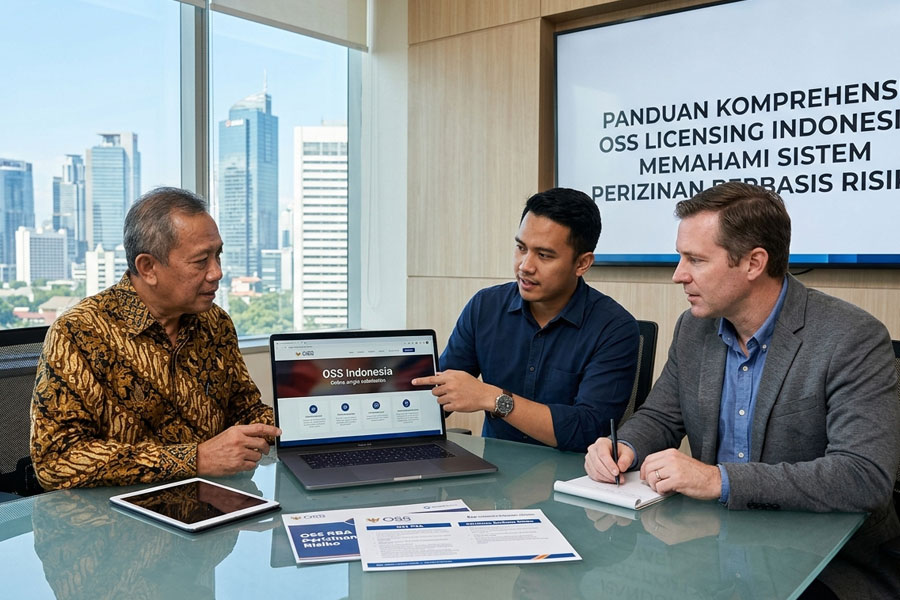
For international entrepreneurs and corporate executives, Indonesia represents one of the most dynamic emerging markets in Southeast Asia. Establishing a legal presence requires a deep understanding of the regulatory framework governing foreign residency and employment. Central to this process is the KITAS for foreign director in Indonesia, a specialized permit that allows qualified individuals to live and manage business operations within the country.
The legal landscape for foreign investment in Indonesia is primarily governed by the Law of the Republic of Indonesia Number 25 of 2007 concerning Investment, which establishes the rights and obligations of foreign investors. As noted in authoritative legal commentaries on Indonesian corporate law, the transition from a foreign investor to a resident director involves navigating both the Investment Coordinating Board (BKPM) and the Directorate General of Immigration. The “KITAS” (Kartu Izin Tinggal Terbatas) is the cornerstone of this transition, acting as a limited stay permit that bridges the gap between temporary business visits and long-term professional residency.
Understanding the Investor KITAS vs. Working KITAS
A common point of confusion for foreign directors is the distinction between the Investor KITAS and the standard Working KITAS. The Investor KITAS (Index E28A) is specifically designed for foreign shareholders who hold a significant equity stake in a Perseroan Terbatas Penanaman Modal Asing (PT PMA). To qualify for this specific category, the applicant must typically meet a minimum personal shareholding threshold, which is currently set at IDR 10 billion.
Conversely, a Working KITAS (Index E23) is utilized by directors who may not meet the high personal equity threshold but are appointed by the company to perform managerial duties. This route requires the company to sponsor the individual as a foreign worker, which involves the payment of the Foreign Worker Compensation Fund (DKP TKA) of USD 1,200 per year. Choosing between these two paths depends heavily on the company’s capital structure and the director’s specific role.
Regulatory Requirements and Compliance
The Indonesian government has streamlined the process through the Online Single Submission (OSS) system, which serves as the primary portal for business licensing. However, the immigration process remains rigorous. To secure a KITAS for a foreign director, the following criteria must be met:
- Corporate Compliance: The PT PMA must be fully registered with a valid Business Identification Number (NIB) and must be current on its Investment Activity Report (LKPM) filings.
- Capitalization: The company must demonstrate that it meets the minimum paid-up capital requirements, which are currently set at IDR 2.5 billion for corporate establishment, though the Investor KITAS itself requires a higher personal equity stake of IDR 10 billion.
- Documentation: Applicants must provide a valid passport with at least 18 months of remaining validity, proof of address, and notarized company deeds.
The legal framework, particularly under the Permenkumham (Minister of Law and Human Rights) regulations, emphasizes that a director’s activities must align with the company’s scope of business. For instance, the regulation stipulates that directors should focus on strategic oversight rather than day-to-day operational tasks that could be performed by local labor.
The Financial and Operational Advantages
For those who qualify for the Investor KITAS, the benefits are substantial. Beyond the prestige of holding an investor-class permit, the primary advantage is the exemption from the annual DKP TKA fee of USD 1,200. Furthermore, the Investor KITAS allows for multiple-entry privileges, enabling directors to travel internationally without the need for additional exit permits, provided they hold a valid Multiple Exit Re-entry Permit (MERP).
From a tax perspective, new residents may also benefit from specific territorial tax positions during their initial years, where they may only be liable for tax on Indonesia-sourced income. This is a critical consideration for high-net-worth individuals and should be reviewed with a tax professional to ensure compliance with both Indonesian and home-country tax laws.
Post-Approval Obligations
Obtaining the physical KITAS card is not the end of the process. Foreign directors must fulfill several post-approval obligations to remain in good standing:
- SKTT (Surat Keterangan Tempat Tinggal): This is a certificate of temporary residence issued by the local civil registry office. It must be processed within 14 days of receiving the KITAS.
- STM (Surat Tanda Melapor): A police registration certificate that confirms the director’s presence in the local jurisdiction.
- Ongoing Reporting: The company must continue to file quarterly LKPM reports. Failure to do so can result in the freezing of the company’s OSS account, which directly impacts the ability to renew the director’s visa.
Strategic Planning for Long-Term Residency
For directors planning a long-term future in Indonesia, the KITAS serves as a gateway to permanent residency, known as the KITAP (Kartu Izin Tinggal Tetap). After holding a KITAS for several consecutive years, an investor may become eligible for this permanent status, which offers greater stability and fewer administrative burdens.
However, the path to a KITAP is stringent. It requires maintaining the investment threshold—often increasing to IDR 15 billion for permanent residency—and demonstrating consistent compliance with all corporate and immigration laws.
Conclusion
Securing a KITAS for a foreign director in Indonesia is a complex but rewarding process that provides the legal foundation for business growth in Southeast Asia’s largest economy. Whether opting for the Investor KITAS or the Working KITAS, success hinges on meticulous preparation, adherence to the latest Permenkumham regulations, and ongoing corporate compliance. By understanding the nuances of shareholding thresholds, DKP TKA exemptions, and post-approval reporting, foreign directors can effectively navigate the Indonesian regulatory environment and focus on what matters most: driving their business forward.