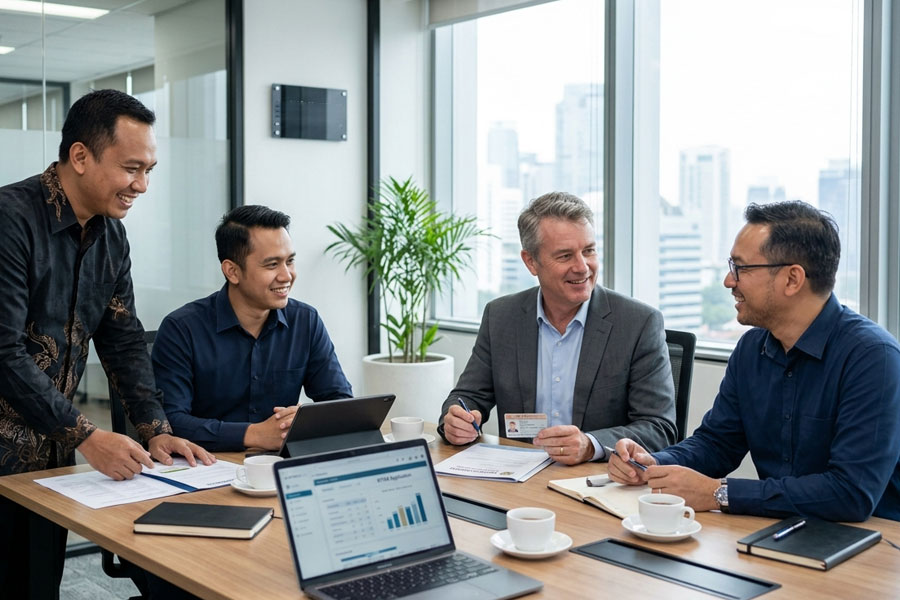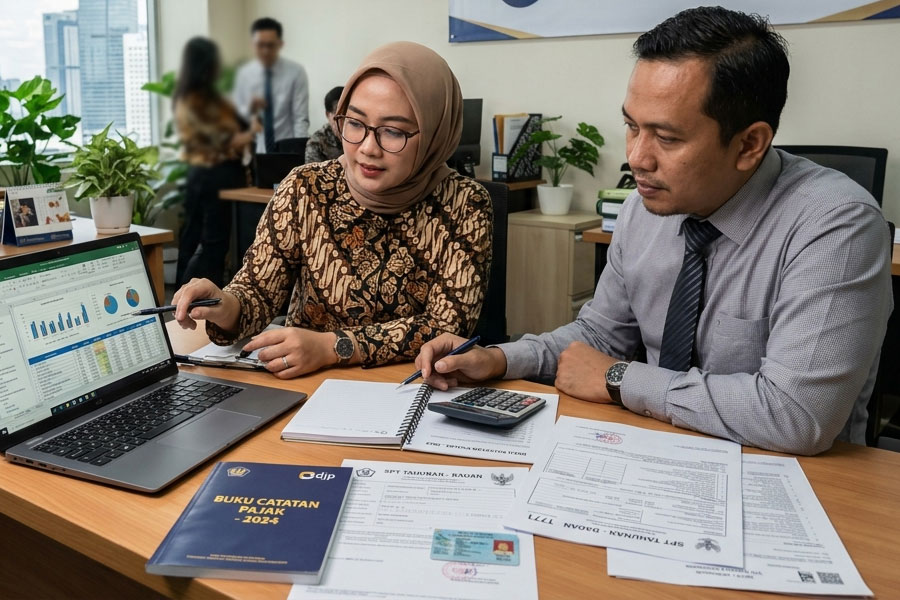
Indonesia’s business world today operates within a highly dynamic regulatory ecosystem, where fiscal policy changes occur at a challenging frequency. For corporate entities, tax compliance is not merely an administrative obligation — it is a fundamental pillar in maintaining operational continuity and company reputation. The complexity of Indonesia’s self-assessment system demands a high level of precision in reporting, calculating, and remitting taxes. When not managed properly, this can lead to significant administrative and criminal tax penalties.
In this context, the role of tax consultants has evolved from simply preparing reports to becoming a crucial strategic partner for corporate management. Tax consultants not only assist with routine compliance obligations but also provide guidance on legal and efficient tax planning to optimize company cash flow without violating applicable regulations.
Table of Contents
ToggleRegulatory Complexity and Compliance Risks
Indonesia’s tax system, based on the General Tax Provisions and Procedures Law (UU KUP), places full responsibility on taxpayers to calculate, track, remit, and report their own taxes. However, this flexibility carries significant risk. Misunderstanding the interpretation of provisions in the Income Tax Law (PPh) or the Value Added Tax Law (PPN) often creates gaps that lead to underpayment or misclassification of taxable objects.
The Strategic Role of Tax Consultants
Competent tax consultants in Indonesia must have a deep understanding of Transfer Pricing — an issue closely monitored by the Directorate General of Taxes (DJP) for both multinational companies and local corporate groups. Transfer pricing practices that are not supported by strong Transfer Pricing Documentation (TP Doc) can trigger lengthy tax disputes.
In addition, tax consultants add value through:
- Internal Audit and Tax Review: Conducting tax examination simulations to identify potential findings before tax authorities conduct a formal audit.
- Dispute Management: Representing companies in the objection, appeal, and lawsuit process at the Tax Court. Arguing effectively before tax judges requires deep legal understanding and a strong grasp of tax jurisprudence.
- Technology Adaptation: Helping companies integrate their accounting systems with electronic tax reporting systems (e-Faktur, e-Bupot, and e-SPT) to ensure reported data is consistent and accurate.
Ethics and Professionalism in Tax Consulting
The professionalism of tax consultants in Indonesia is governed by a strict code of ethics. It is emphasized that tax consultants must act as a bridge between taxpayers and tax authorities — not as facilitators of illegal tax evasion. Strategic tax planning must remain within the boundaries of legally permitted tax avoidance, which means utilizing government-provided tax incentives designed to drive economic growth, such as tax holiday or tax allowance facilities for certain sectors.
Conclusion
Navigating corporate tax compliance in Indonesia requires a combination of deep technical understanding and a strategic view of national fiscal policy direction. By engaging experienced tax consultants, corporations are not only protected from the risk of penalties but are also able to optimize fiscal efficiency that supports long-term business growth. In an era of global data transparency, the role of tax consultants will become increasingly crucial in ensuring that every rupiah of tax paid reflects honest compliance and smart efficiency.