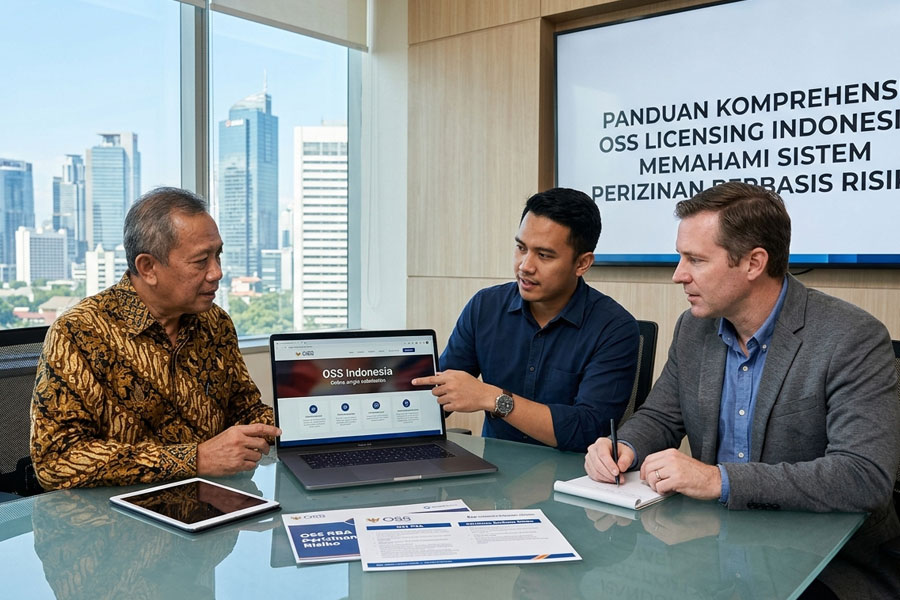
Understanding labor regulations for foreign workers is a crucial aspect for every company operating in Indonesia. As global investment continues to grow, the Indonesian government has simplified the permit process through an integrated system to ensure that every company’s work permit in Indonesia is managed with strict legal compliance. This process is not just an administrative formality — it is the foundation for the sustainable operations of foreign companies in the country.
In Indonesian business law, the status of foreign workers is strictly regulated to protect the domestic labor market while also facilitating the transfer of technology and expertise. Under Indonesian Labor Law, every company that employs foreign nationals is required to have a Foreign Manpower Utilization Plan (RPTKA) approved by the relevant ministry. This document serves as proof that the position filled by the foreign worker genuinely requires specialized skills that are not yet available locally. Without a valid RPTKA, a company cannot proceed to the next stage of obtaining a Limited Stay Permit (KITAS), which acts as the de facto work permit for the individual.
Table of Contents
ToggleThe Importance of Compliance in RPTKA and Work Permits
The process of managing work permits in Indonesia has now fully shifted to a digital system. Companies must understand that the employer’s primary obligation is to ensure that the foreign worker has the educational qualifications and work experience relevant to the position they hold. It is emphasized that non-compliance with labor regulations can result in heavy administrative sanctions, including the suspension of the company’s operating license.
Main Steps for Obtaining a Work Permit
To obtain a work permit for a company in Indonesia, there is a standard workflow that must be followed:
- RPTKA Submission — The company must submit a foreign manpower utilization plan through an integrated online system. This includes justification for the position, duration of work, and work location.
- DPKK Payment — The Foreign Manpower Compensation Fund (DKP-TKA) must be paid to the state treasury as a contribution toward developing the local workforce.
- Work Visa Approval — Once the RPTKA is approved, the foreign worker can apply for a limited stay visa for work purposes (E-Visa) through the Indonesian embassy or consulate abroad.
- KITAS Issuance — Upon arriving in Indonesia, the foreign worker must report to and provide biometric data at the local immigration office to receive the Limited Stay Permit Card (KITAS).
Challenges and Company Strategies
Many multinational companies often face difficulties interpreting regulations that continue to change. It is therefore strongly recommended that companies have an HR department that understands the Job Creation Law, which has changed many aspects of employment procedures. The government’s current focus is on ease of doing business, but this is still accompanied by strict oversight of tax compliance and social security obligations for foreign workers.
Every foreign worker employed in Indonesia must be registered in the social security programs (BPJS Ketenagakerjaan and BPJS Kesehatan). This is an absolute obligation that must be fulfilled by the company as the employer. Failure to register foreign workers in the social security system can hinder work permit renewals in the future.
Conclusion
Managing a work permit for a company in Indonesia requires attention to detail, a thorough understanding of regulations, and strict compliance with applicable procedures. By following the process set by the government and ensuring all supporting documents are valid, companies can ensure smooth business operations without any legal obstacles. Investing in compliance is an investment in long-term business stability in Indonesia.