The Indonesian archipelago represents one of the most dynamic and complex digital landscapes in the world. With a demographic dividend characterized by a young, tech-savvy population and a rapidly expanding middle class, the nation is transitioning from a traditional commodity-based economy to a digital-first powerhouse. Strategic market analysis in this region requires a nuanced understanding of the “archipelago effect”—the logistical, cultural, and infrastructural fragmentation that necessitates localized, rather than monolithic, business strategies. As noted in foundational economic texts, the integration of digital platforms into emerging markets is not merely a technological upgrade but a fundamental restructuring of value chains.
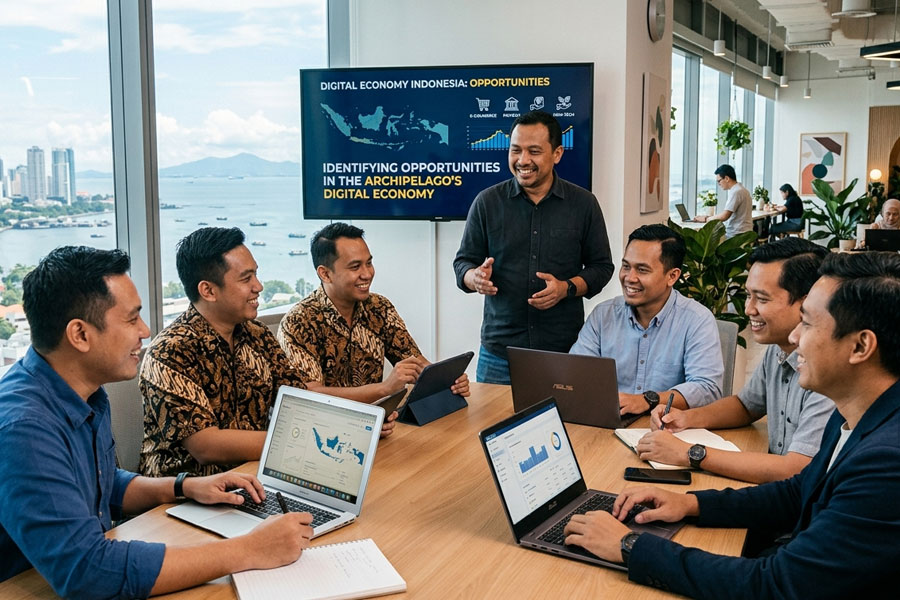
To identify opportunities within this digital economy, firms must employ a multi-dimensional framework that accounts for the unique intersection of geography and connectivity. The digital economy in Indonesia is currently valued through high-frequency transaction data and mobile-first consumer behavior. When analyzing market entry or expansion, firms should utilize the following strategic pillars: infrastructure readiness, regulatory agility, and the “hyper-local” consumer experience.
The Demographic Dividend and Consumer Behavior
The Indonesian digital consumer is distinct in their reliance on mobile-first platforms. Unlike Western markets, where desktop computing preceded mobile adoption, the archipelago leapfrogged directly into the mobile era. This has created a unique ecosystem where social commerce and “super-apps” dominate the retail landscape. According to research on emerging market consumerism, the trust deficit in digital transactions is often bridged through social proof and integrated payment gateways, which have become the backbone of the digital economy. Businesses that succeed in this environment are those that prioritize “frictionless” experiences, integrating logistics with digital payments to overcome the physical barriers of the archipelago.
Navigating Regulatory and Infrastructural Challenges
Strategic analysis must also account for the regulatory environment, which is evolving to protect local digital sovereignty while encouraging foreign investment. The government’s focus on digital transformation, often referred to as the “Making Indonesia 4.0” initiative, provides a roadmap for sectors such as fintech, edtech, and agritech. However, infrastructure remains the primary bottleneck. The cost of logistics in an archipelagic nation is significantly higher than in contiguous landmasses. Therefore, the most lucrative opportunities lie in “logistics-tech”—solutions that optimize supply chain visibility and last-mile delivery across thousands of islands.
Identifying High-Growth Sectors
The digital economy is not monolithic; it is a collection of sub-sectors with varying levels of maturity. Fintech, particularly micro-lending and digital wallets, has seen exponential growth due to the large unbanked population. Furthermore, the agricultural sector, which employs a significant portion of the workforce, is ripe for digital disruption. By utilizing IoT (Internet of Things) sensors and data analytics, firms can improve yield forecasting and supply chain efficiency, effectively bridging the gap between rural producers and urban consumers. This “farm-to-table” digital integration is a prime example of how technology can solve structural inefficiencies in the archipelago.
Strategic Recommendations for Market Entrants
For firms looking to capitalize on these opportunities, a “Jakarta-centric” strategy is no longer sufficient. The next wave of growth will emerge from Tier-2 and Tier-3 cities. Strategic analysis should focus on:
- Localization: Adapting products to local languages and cultural nuances.
- Partnerships: Collaborating with established local players to navigate regulatory hurdles and logistical complexities.
- Scalability: Developing infrastructure-agnostic solutions that can function in areas with intermittent connectivity.
By focusing on these areas, businesses can mitigate the risks associated with the archipelago’s fragmentation while tapping into the immense potential of its digital transformation. The digital economy in Indonesia is not just a market; it is a complex, evolving ecosystem that rewards those who understand the interplay between geography, technology, and human behavior