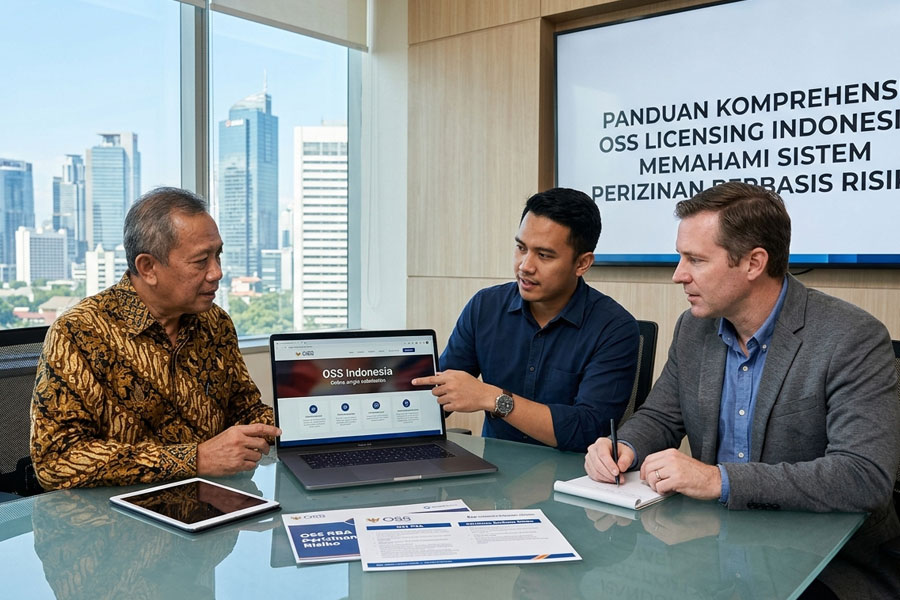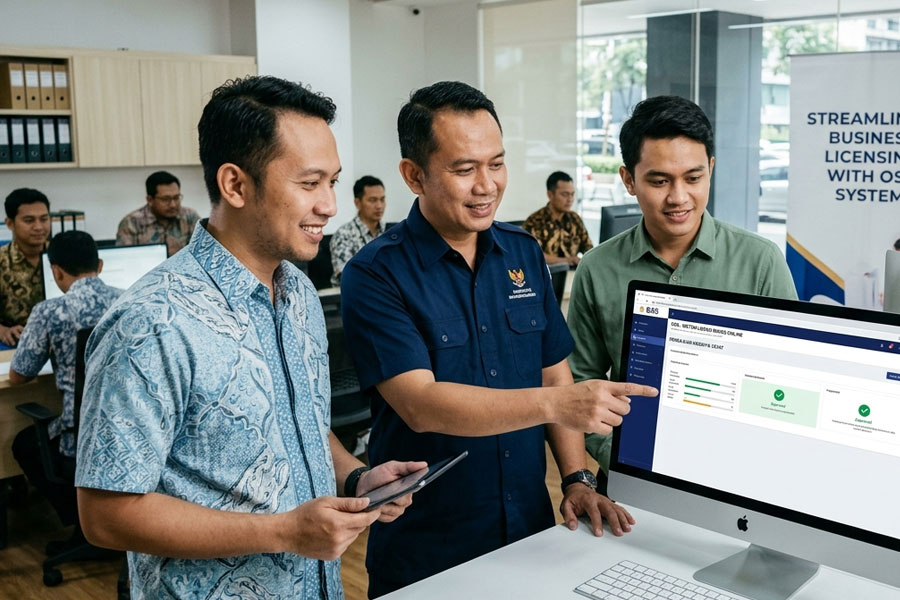
The landscape of Indonesian commerce has undergone a profound transformation with the implementation of the Online Single Submission (OSS) system. Historically, the process of obtaining business permits in Indonesia was characterized by a fragmented, multi-layered bureaucratic structure that often discouraged foreign and domestic investment alike. In the context of emerging market economies, administrative efficiency is a primary determinant of economic growth, as noted in studies regarding the “ease of doing business” index. By centralizing the regulatory framework, the Indonesian government has sought to replace manual, paper-based, and localized licensing procedures with a digital, integrated, and transparent mechanism that aligns with global standards for administrative reform.
The OSS system functions as a digital gateway that effectively unifies the licensing process, which was previously dispersed across various ministries and local government agencies. By consolidating these disparate functions into a single online platform, the system minimizes the “bureaucratic friction” that often plagues emerging economies. The core of this streamlining process is the issuance of the Nomor Induk Berusaha (NIB), or Business Identification Number. The NIB serves as a singular identity for a business entity, replacing multiple legacy permits such as the Company Registration Certificate (Tanda Daftar Perusahaan), the Import Identification Number (Angka Pengenal Impor), and customs access rights.
The Mechanism of Integration
The OSS system operates on the principle of “risk-based licensing,” a concept that has been widely discussed in contemporary public administration literature as a means to optimize regulatory oversight. By categorizing business activities based on their potential impact on health, safety, and the environment, the system allows for a differentiated approach to licensing. Low-risk businesses can obtain their permits almost instantaneously, while higher-risk activities undergo a more rigorous, yet still digitized, verification process.
By reducing Tnew through automated validation, the system significantly increases the overall efficiency of the business entry process.
Reducing Bureaucratic Redundancy
Before the introduction of the OSS system under Government Regulation No. 24 of 2018 (GR 24/2018), investors were often required to navigate a labyrinth of local and national regulations, which frequently overlapped or contradicted one another. The OSS system acts as a “single window” service, ensuring that all licensing applications are processed through one centralized portal. This not only promotes transparency by creating a digital audit trail of every application but also standardizes the requirements across different regions. The Investment Coordinating Board (BKPM) has played a pivotal role in this transition, evolving the system through various iterations to ensure that the technical infrastructure can handle the volume of applications while maintaining data integrity.
Impact on Transparency and Compliance
Transparency is a critical component of the OSS system. By moving the licensing process into a digital environment, the system reduces the opportunities for rent-seeking behavior and arbitrary decision-making that often occur in face-to-face bureaucratic interactions. The integration of the OSS system with other government databases—such as the tax office and the Ministry of Law and Human Rights—ensures that business data is synchronized in real-time. This synchronization eliminates the need for businesses to repeatedly submit the same documentation to different government agencies, thereby streamlining the compliance burden for entrepreneurs.
Future Outlook and Continuous Improvement
The evolution of the OSS system, from its inception under Presidential Regulation No. 91 of 2017 to its current iterations, demonstrates a commitment to iterative policy design. As the system continues to integrate more sectors and refine its risk-based assessment algorithms, the administrative burden on businesses is expected to decrease further. For businesses operating in Indonesia, the OSS system represents a shift from a “permission-based” culture to a “registration-based” culture, where the focus is on compliance with established standards rather than the acquisition of individual permits.