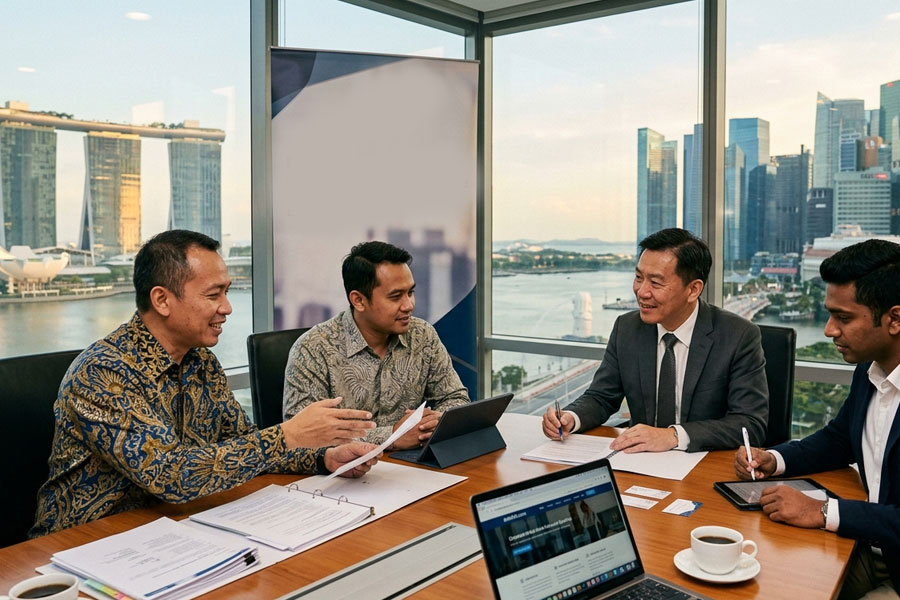
Singapore has long established itself as a premier global financial hub, consistently ranking at the top of international indices for ease of doing business. For entrepreneurs and multinational corporations, the strategic importance of establishing a corporate presence in the city-state is often predicated on the ability to secure a robust banking infrastructure. Opening a corporate bank account in Singapore is a critical milestone that facilitates international trade, capital management, and tax efficiency. However, the process is governed by stringent regulatory frameworks designed to maintain the integrity of the financial system, requiring meticulous preparation and a deep understanding of local compliance standards.
The Regulatory Landscape and Compliance
The banking sector in Singapore is overseen by the Monetary Authority of Singapore (MAS), which enforces rigorous Anti-Money Laundering (AML) and Countering the Financing of Terrorism (CFT) protocols. As noted in authoritative texts on international business law, Singaporean banks operate under a “Know Your Customer” (KYC) mandate that is among the most comprehensive in the world. When a corporation applies for an account, the bank acts as a gatekeeper, performing extensive due diligence on the company’s beneficial owners, directors, and the nature of its business activities. This process is not merely a formality but a risk-assessment exercise where the bank evaluates the potential for financial crime.
Essential Documentation and Requirements
To successfully navigate the account opening process, a company must present a well-organized dossier. While requirements vary between institutions—such as DBS, OCBC, and UOB—the core documentation typically includes:
- Certificate of Incorporation: Proof of the company’s legal existence.
- Business Profile: Extracted from the Accounting and Corporate Regulatory Authority (ACRA).
- Memorandum and Articles of Association: Outlining the company’s governance structure.
- Board Resolution: A formal document authorizing the opening of the account and designating authorized signatories.
- Identity Verification: Passports and proof of residential addresses for all directors, shareholders, and ultimate beneficial owners (UBOs).
- Business Proof: Contracts, invoices, or business plans that demonstrate the legitimacy of the company’s revenue streams.
The Importance of Substance
In the current global tax environment, particularly following the implementation of Base Erosion and Profit Shifting (BEPS) initiatives, banks are increasingly focused on the “economic substance” of the applicant. It is no longer sufficient to merely register a company; banks want to see that the business has a genuine connection to Singapore. This may include having a local office, hiring local staff, or maintaining a physical presence in the country. For foreign-owned entities, demonstrating a clear rationale for why the account is needed in Singapore—such as regional trade settlement or treasury management—is vital for approval.
Strategic Considerations for Success
The process of opening a corporate bank account can be time-consuming, often taking several weeks depending on the complexity of the corporate structure. To optimize the chances of success, businesses should consider the following strategies:
- Transparency: Be prepared to explain the source of wealth and the source of funds in detail. Any ambiguity can lead to prolonged inquiries or rejection.
- Professional Assistance: Engaging with corporate secretarial firms or legal advisors who have established relationships with local banks can streamline the process. These professionals often understand the specific risk appetites of different banks.
- Digital Readiness: Many Singaporean banks have embraced digital transformation. Utilizing digital onboarding platforms can expedite the submission of documents, though physical meetings are still frequently required for high-risk or complex entities.
Financial Implications and Operational Efficiency
Once the account is active, businesses gain access to Singapore’s highly sophisticated financial ecosystem. This includes seamless integration with global payment networks, access to multi-currency accounts, and advanced trade finance solutions. The efficiency of the Singaporean banking system is reflected in the speed of cross-border transactions, which is essential for businesses operating in the ASEAN region and beyond. Furthermore, the stability of the Singapore Dollar (SGD) provides a hedge against volatility, making it an attractive currency for corporate reserves.
Conclusion
Opening a corporate bank account in Singapore is a gateway to international expansion, but it requires a disciplined approach to compliance and documentation. By aligning with the regulatory expectations of the MAS and providing clear, verifiable information regarding business operations, companies can secure the financial infrastructure necessary for long-term success. As the financial landscape continues to evolve, maintaining a proactive stance on compliance will remain the cornerstone of a successful banking relationship in Singapore.